
Samenspelen is a project we created with DELA, Radboud University, and Games for Health. The aim was to explore whether digital play could help reduce loneliness among older adults. Instead of focusing on conversation alone, we looked at what both grandparents and grandchildren already share: text messages. Simple chats often fade quickly, but a playful format can turn them into something more meaningful.
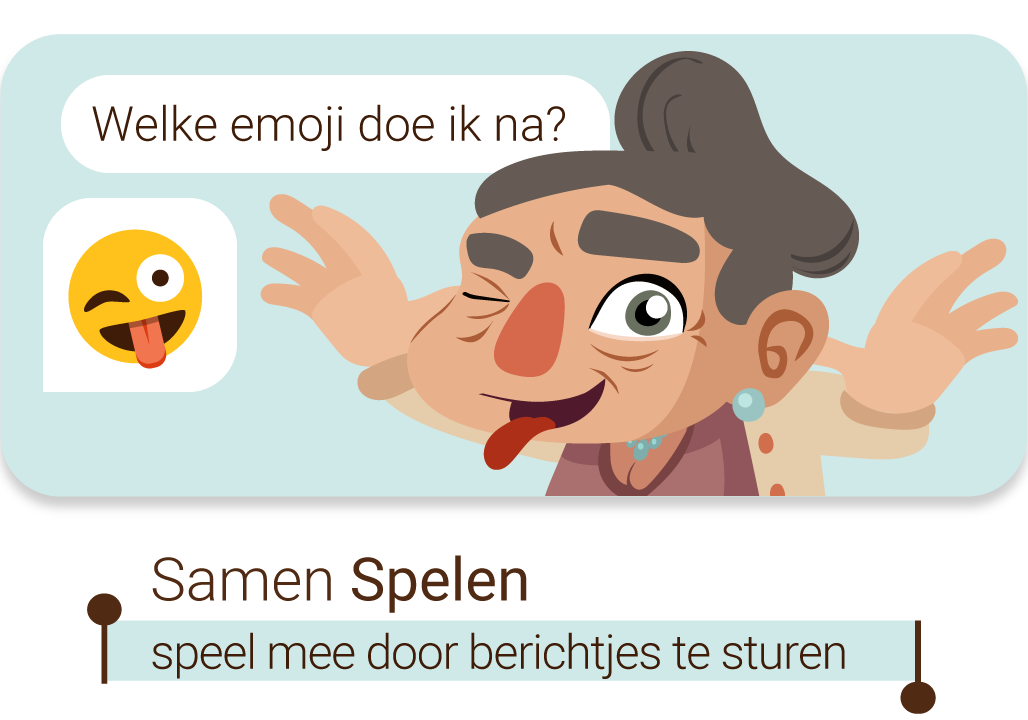
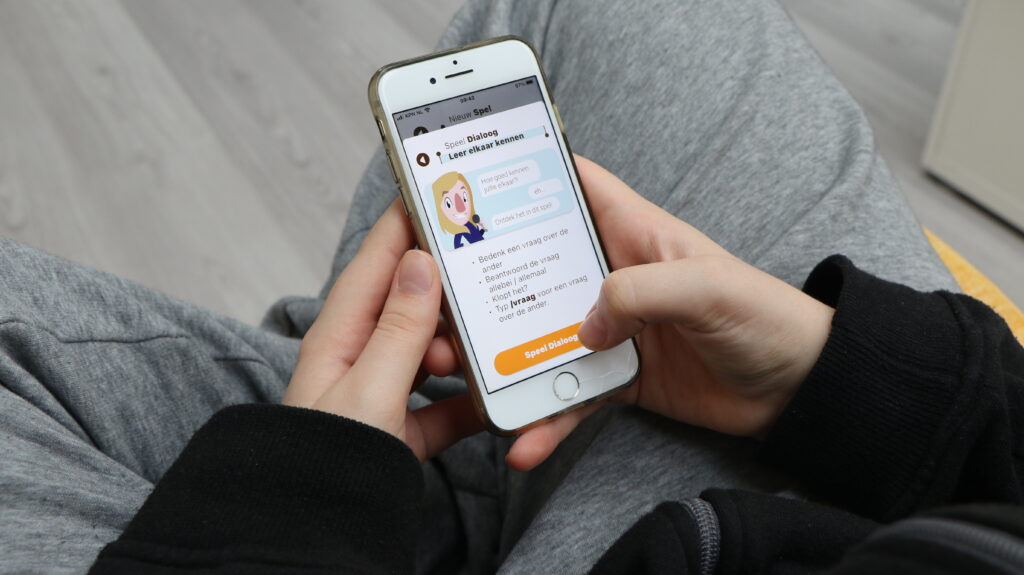
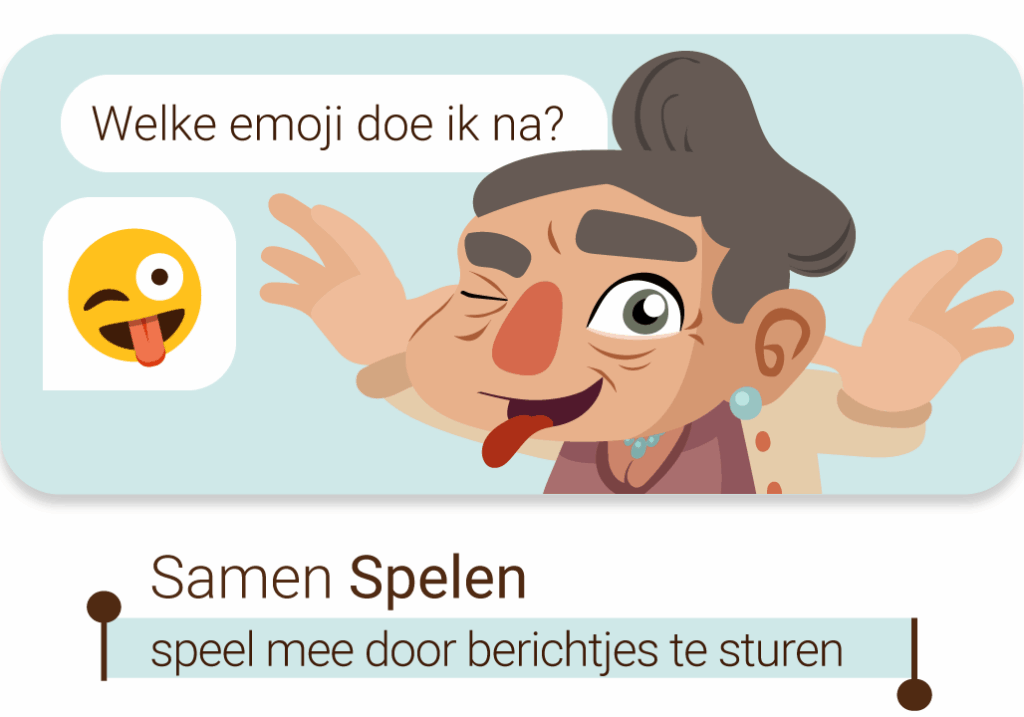
Samenspelen is a text-based game environment inside a chat interface. Players can start word games, emoji puzzles, or photo challenges instead of regular messages.
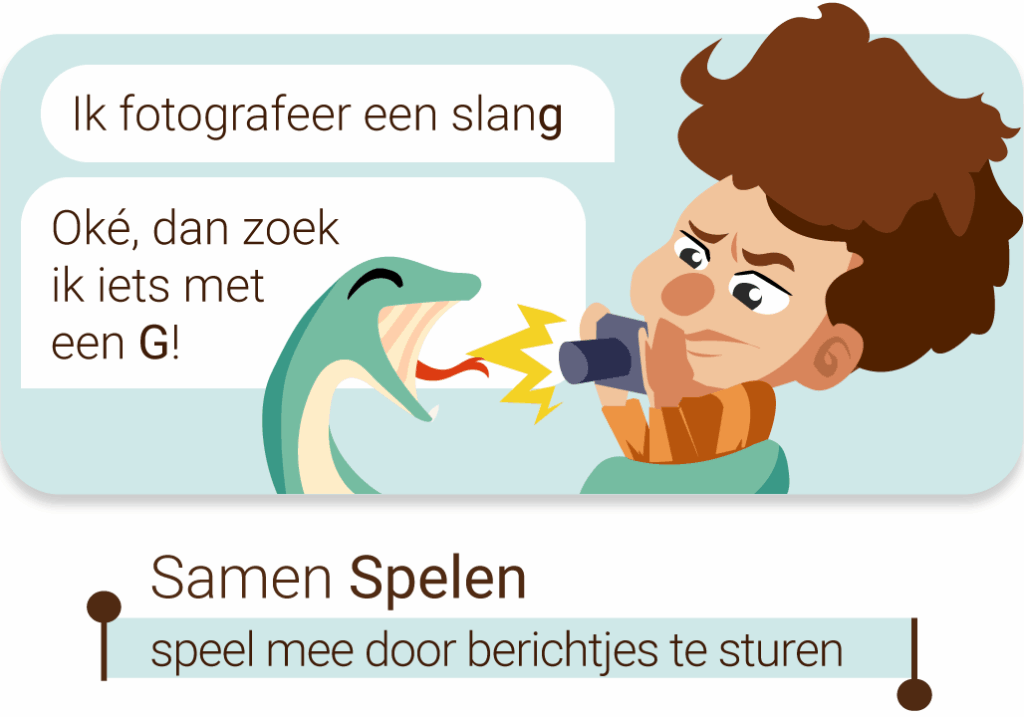
One game, Fotoslang (Photo Snake) proved especially popular. You take a picture of an object, say, a cup that ends with the letter “P.” The next player responds with a photo of something starting with “P,” like an postcard. Step by step, the chain continues.
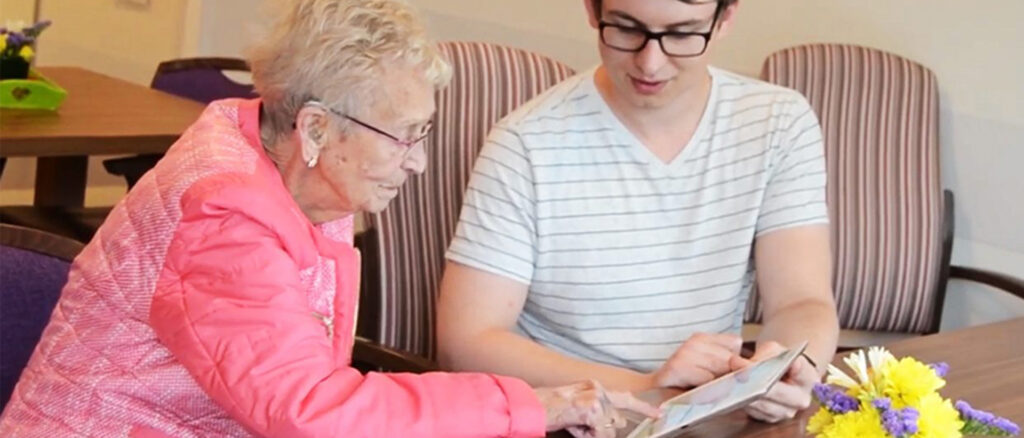
By sending photos each day, players share small glimpses of their lives. We tested the game in groups of older adults, including one community centre where people played together for over three months.
Researchers at Radboud University ran randomized controlled trials, data analyses en semi structured interviews, which showed that tools like Samenspelen can foster contact and group cohesion.
For me as a designer, the project highlighted how context and facilitation matter most: once people start playing, they keep in touch. And that daily contact, however small, creates a sense of connection.




Associated publications
A Digital Gaming Intervention to Strengthen the Social Networks of Dutch Older Adults: Process Evaluation of a Randomized Controlled Trial
BACKGROUND With the digitalization of society and increasing loneliness due to population aging, the potential for digital loneliness interventions is growing. This article describes the mixed methods process evaluation of a digitally conducted randomized controlled trial, evaluating a mobile gaming application newly designed to improve the social connectedness of community-dwelling older adults.
OBJECTIVE This paper aims to evaluate a social gaming application in community-dwelling older adults through a mixed-methods process evaluation of a digitally conducted randomized controlled trial (RCT).
METHODS The RCT compared two gaming conditions with a control group. We included adults aged 65 years and over. The process evaluation involved a focus group and semi-structured interviews with the RCT participants and welfare organizations to explore barriers and facilitators for app usage and gameplay and analyzed questionnaire adherence, game engagement, network measures, and retention.
RESULTS Of the 372 people who signed up for the RCT, 76 adults installed the app and signed informed consent, of whom 33 were 65+. The baseline completion rate of questionnaires was 36%, rapidly declining during follow-up. Participants experienced the app differently, varying from engaging to too simple or too complex. Participants suggested challenging and competitive games with increasing difficulty levels. Repeated instruction and in-person and personal contact were deemed essential to reach and engage the intended population.
CONCLUSIONS Conducting a digital trial of a social gaming intervention for older adults is a great challenge. Evaluation of future digital gaming interventions should start with small-scale studies with personal contact and fewer questionnaires.
Read the full article here
Social Gaming Against Loneliness in Older Adults: A Feasibility Study
Background: Digital Mental Health Interventions could sustainably and scalably prevent and reduceloneliness in older adults. We designed an app containing a questionnaire-administering chatbot and 29text-based games to stimulate inter-generational contact. We evaluate the app’s feasibility in reducingloneliness in older adults, addressing recruitment, data collection procedures, and gameplay activity.
Method: Recruitment, without strict exclusion and age criteria, was arranged via newsletters, articles,and a social media campaign. We used semi-structured interviews and descriptive analysis of questionnaire answers and game data.
Results: The social media campaign reached 192.641 potential participants resulting in 1363 game downloads; 34 participants aged 65+ and 121 aged 65- provided consent (i.e., 99.92% dropout). Participants were primarily healthy, independently living, highly educated, working, married, female, and with children. We interviewed twelve Dutch-speaking participants (aged 65-79 years; 83% female). Dropout reasons entailed; too many chatbot questions and a mismatch between the inter-generational design focus and target group, as participants mainly played with peers.
Conclusion: This study underlines the recruitment and retention difficulties regarding older adults in asocial gaming loneliness intervention. It highlights the importance of a realistic assessment of recruitment strategies and targeted design for older adults in terms of language and user interface
Read the full article here
Improving the Social Connectedness of Older Adults Through Digital Social Gaming – A Pilot Study
Background Digital social interventions for older adults have become increasingly important due to their flexibility and potential to reduce loneliness. Digital games provide easy and fun interaction possibilities but need more exploration.
Methods Using a mixed-methods design, we piloted a chat-based mobile application (PhotoSnake) designed to elicit social connectedness. Participants joined two in-person workshops two weeks apart and a focus group afterwards. They filled in a demographics and loneliness questionnaire pre- and post-intervention, and we collected anonymous in-app data.
Results At baseline, participants (N = 15) were 74 years old, moderately lonely (Median = 2.0), partnered (40%), retired (93%), and living independently alone (53%) or with others (47%). Loneliness did not change over time. They valued the in-person workshops to get to know each other. Participants enjoyed playing the game for a few days but felt it lacked sufficient variation to persist gameplay. Furthermore, the in-app interaction mainly focused on the game and was perceived as too superficial to be meaningful.
Conclusion This study helps design future digital interventions by showing the importance of in-person contact for engagement and meaningfulness. Players do not automatically label in-game interaction as valuable, and game design should focus on aiding players in creating personal interaction moments.
Read the full article here
A Digital Gaming Intervention to Strengthen the Social Networks of Older Dutch Adults: Mixed Methods Process Evaluation of a Digitally Conducted Randomized Controlled Trial
Background Digital loneliness interventions for older adults are promising, yet conclusive evidence is lacking due to a lack of randomized controlled trials (RCTs) and difficulties with recruitment. Process evaluation of performed RCTs is essential to inform future interventions. Still, it is rarely carried out, resulting in an overly optimistic view of the impact of eHealth interventions on loneliness in older adults and options to conduct such research entirely remotely.
Objective We describe a mixed methods process evaluation of a digitally conducted RCT assessing the effectiveness of a mobile social gaming app to facilitate meaningful social interactions in older adults.
Methods We analyzed the questionnaire and game data of the RCT participants to evaluate recruitment and onboarding, intervention adherence, and intervention acceptability. The RCT participants were allocated either to the main group of older adults (aged 65 years or older) or the side group (aged between 18 and 64 years). The side group used networking to play with the older adults.
We also conducted 6 post-RCT evaluation interviews and 1 focus group with a total of 4 RCT participants and 5 welfare organization representatives that aided in RCT recruitment. Results In total, 371 people aged 18 years or older signed up for the RCT, of which 64% (238/371) were aged 65 years or older. Of the total sample, 20% (76/371) installed the app and signed informed consent, showing a large dropout during onboarding. The high number of questions was a relevant barrier for participants.
Both questionnaire and gameplay adherence were low. Participants indicated that the games elicited contact and a feeling of togetherness and proposed challenging and competitive games with increasing difficulty levels. They suggested focusing on enjoying the games rather than administering questionnaires.
Conclusions Conducting a remote digital trial of a social gaming intervention for older adults is a great challenge. Remote recruitment and informed consent acquisition may often not result in sufficient participation. Personal engagement with fellow participants and researchers might be essential for adherence and enjoyment. Future digital gaming interventions should start with small-scale studies with in-person contact, repeated instructions, and fewer questionnaires.
Read the full article here
Social Gaming to Decrease Loneliness in Older Adults: Recruitment Challenges and Attrition Analysis in a Digital Mixed Methods Feasibility Study
Background Digital mental health interventions could sustainably and scalably prevent and reduce loneliness in older adults. We designed an app containing 29 text-based games and a questionnaire-administering chatbot to stimulate intergenerational contact.
Objective This study aims to evaluate the feasibility of a social gaming app in reducing loneliness among older adults by evaluating recruitment strategies, data collection procedures, and gameplay activity.
Methods This mixed methods study recruited participants via newsletters, articles, and a social media campaign. We used semistructured interviews and descriptive analysis of questionnaire answers and game data to assess feasibility. Key measures included recruitment reach and efficiency, participant demographics, in-app activity, and app usability and engagement feedback.
Results The social media campaign reached 192,641 potential participants, resulting in 1363 game downloads. A total of 155 participants (aged 65 years and older: n=34, 21.9% and aged less than 65 years: n=121, 78.1%) provided informed consent, yielding a conversion rate of 0.08%.
The recruitment campaign focusing on distanced playful interaction had a significantly (P<.001) higher click-through rate (1.98%) than a campaign focusing on research participation (click-through rate=0.51%; P<.001).
The overall conversion rate from advertisement exposure to research participation was 0.08%. Participants had a mean age of 48 (SD 16) years. The 65 years and older group averaged 70 (SD 5) years, while the less 65 years group averaged 42 (SD 12) years. Additionally, 45.2% (57/126) reported at least moderate levels of loneliness at baseline.
Of the initial 554 players, 91 (16.4%) remained active after the first week, and 32 (5.8%) remained active for more than 90 days. Active participants tended to interact with those within their own age group, as indicated by a Pearson correlation of r=0.31 between the ages of the message sender and receiver.
Interviews with 12 (48%) participants (aged 65-79 years; female: n=12, 83%) revealed barriers such as excessive chatbot questions and a mismatch between the target group and app design focus. Questionnaire completion rates dropped from 46% at baseline to 10% at follow-up.
Conclusions These findings underscore the challenges of recruitment and retention for older adults in a fully digital social gaming intervention. Effective recruitment strategies and targeted app design are crucial for engagement. Based on these insights, future interventions should focus on simplified interfaces, clear guidance for gameplay, and addressing the specific needs and preferences of older adults, thereby enhancing the effectiveness of digital mental health interventions.
Leave a Reply