
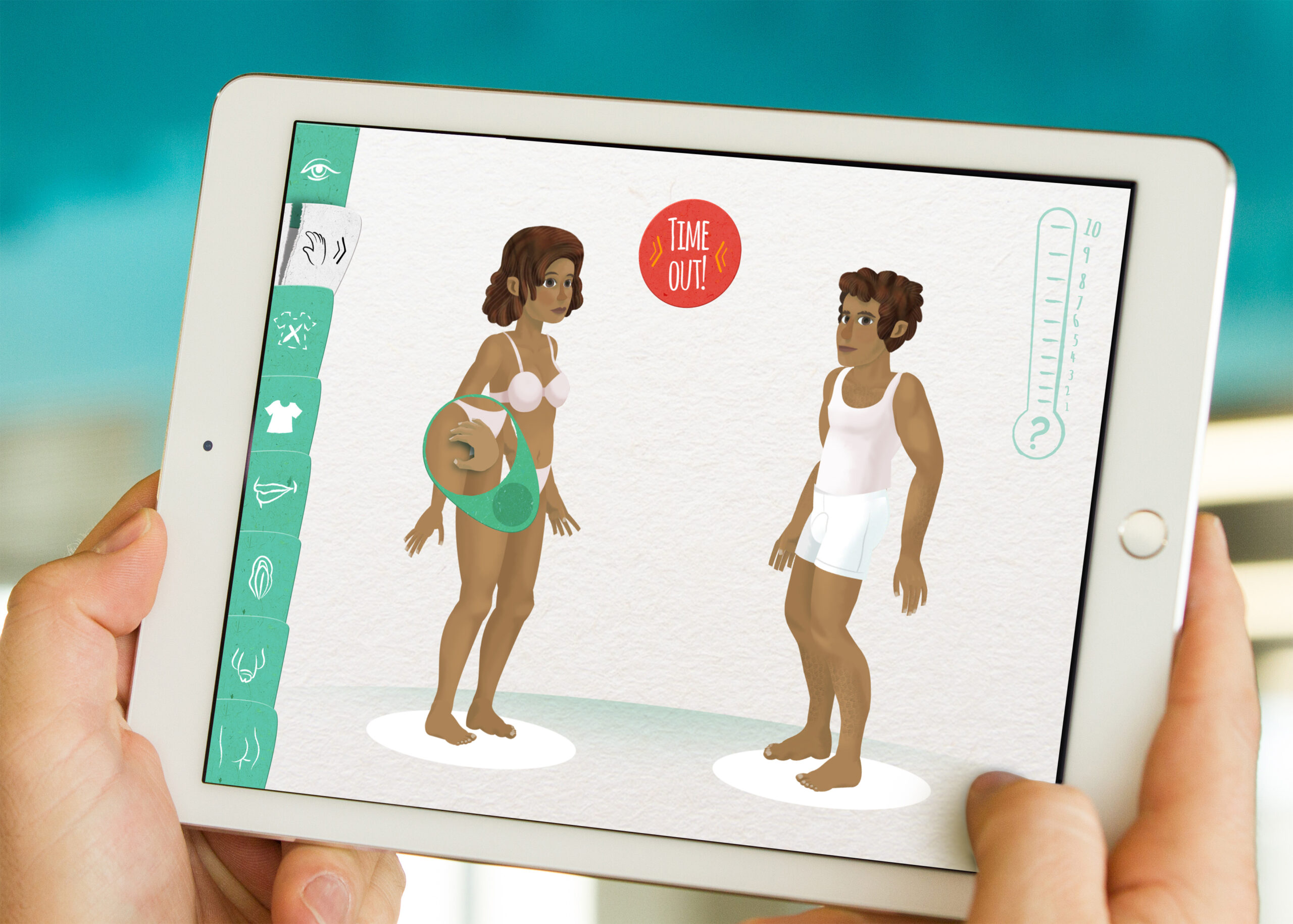
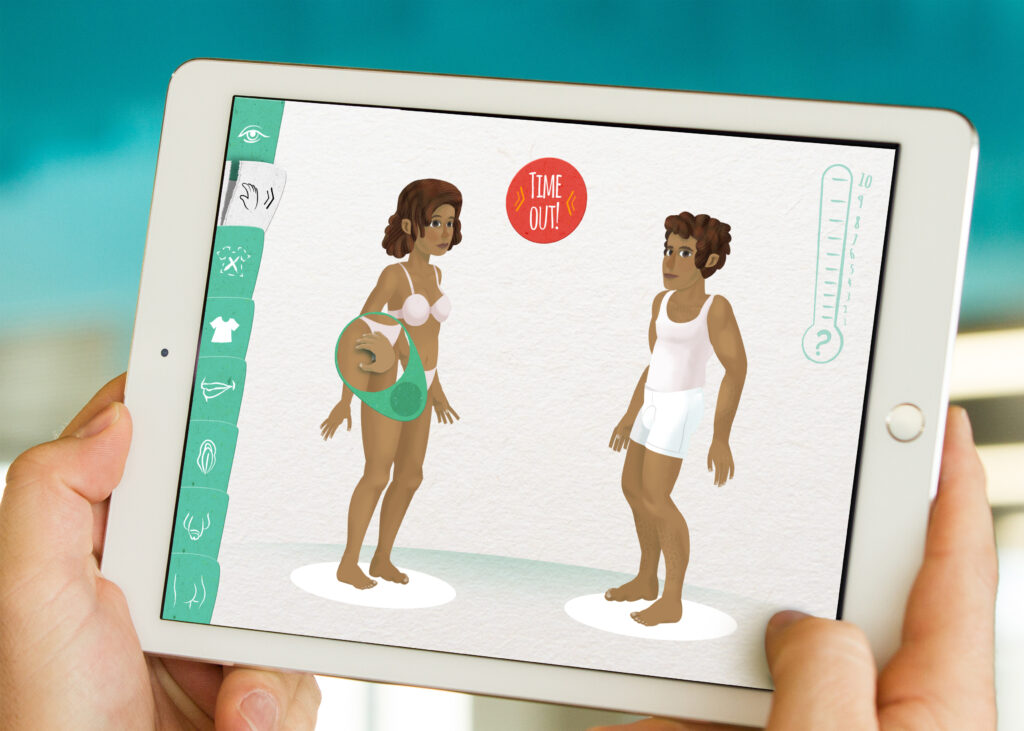
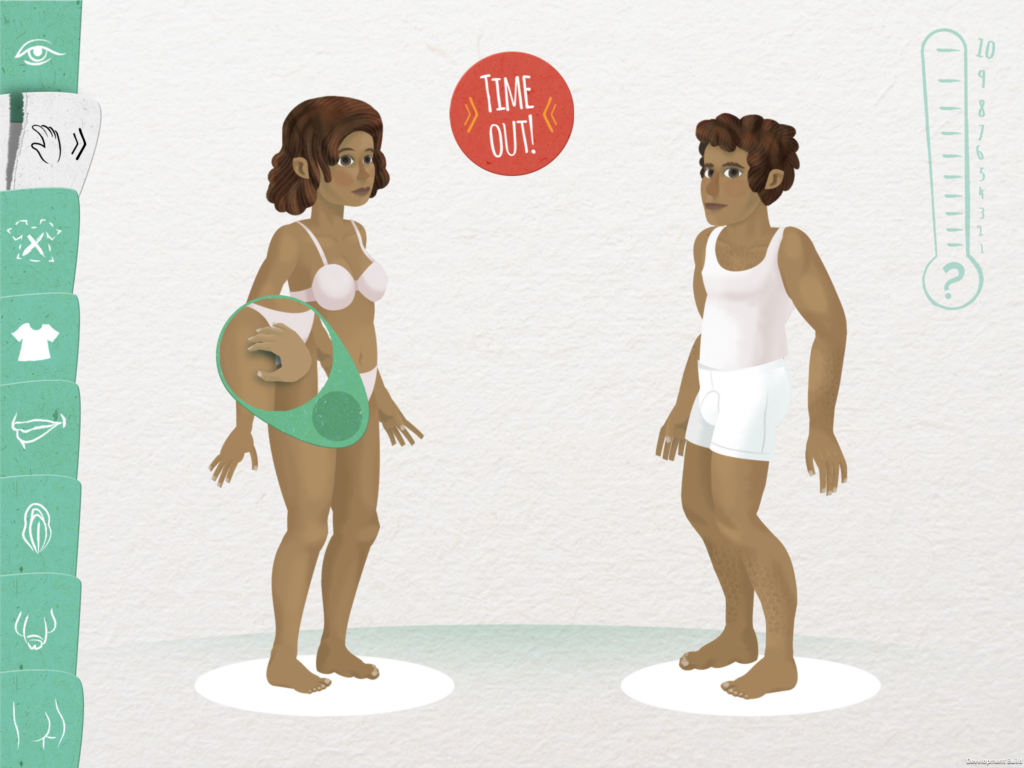
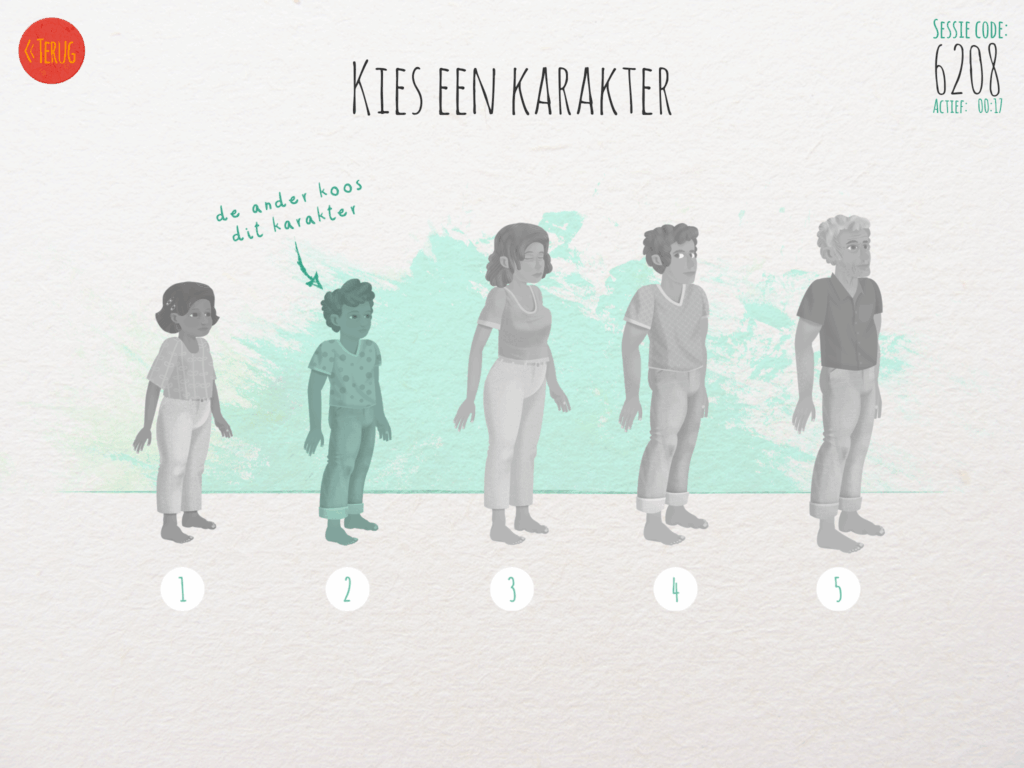
VilDu is a therapeutic game for children who have experienced sexual abuse. The game makes it possible to share without having to speak right away. Therapist and child both sit behind their own screen. They choose a character and let it act.
The actions are always ambiguous. A hand over the hair can mean comfort. The same hand can also mean aggression. This ambiguity lowers the barrier to speak. It invites the child to explain what is really meant. In practice, the game helps shorten therapy by several weeks.
We created VilDu together with De Rading and Yip Yip. The game offers a safe space to explore a very difficult subject. It gives children a way to express themselves and therapists a way to listen. The conversation becomes less overwhelming. The setting becomes more open.
Step by step, both sides can work towards understanding. Researchers at Utrecht University studied how VilDu can be implemented in therapy. Their work resulted in a clinical manual. This manual provides therapists with concrete suggestions on how to integrate the training into their sessions. VilDu shows how play can create trust and space for healing.
Associated Publications:
A Therapeutic Game for Sexually Abused Children and Adolescents (Vil Du?!): Exploratory Mixed Methods Evaluation
Background: Talking about experiences of sexual abuse in therapy is difficult for children and adolescents. Possible reasons for this difficulty are a lack of vocabulary to describe the situation or feelings of shame, fear, and self-blame associated with sexual abuse. The serious game Vil Du?! was developed to help children open up about their sexual abuse experiences. Vil Du?! is a nonverbal communication game that resembles a dress-up game in which children can show the therapist what happened to them.
Objective: This exploratory evaluation study examines which working elements of the game could be identified in therapy with victims of sexual abuse (aim 1). In addition, this study examines how therapists evaluate the acceptability of the game (aim 2). Methods: The therapists completed 23 web-based surveys on the use of Vil Du?! In addition, semistructured interviews were conducted with 10 therapists. The data were analyzed in NVivo following previously reported stepwise guidelines.
Results: Regarding aim 1, therapists mentioned various working elements of Vil Du?!; for instance, Vil Du?! puts the child in control of the situation. In addition, Vil Du?! reduces barriers to disclosure because there is no need to talk or have eye contact with the therapist. Regarding aim 2, Vil Du?! was generally evaluated more positively than negatively by the therapists. For instance, therapists indicated that using Vil Du?! is time efficient and might make the treatment process less confronting and difficult for the client. According to therapists, most clients indeed experienced less tension and more positive (or neutral) emotions than negative emotions when using Vil Du?! Conclusions: The most important working elements of Vil Du?!, according to therapists, are that it enables children to regain control over their sexual abuse experiences and reduces barriers to disclosing sexual abuse experiences. The more positive evaluation of Vil Du?! indicates the acceptability of the game for therapists as well as their clients.
Read the full article here.
Vil Du?! incorporation of a serious game in therapy for sexually abused children and adolescents
Background Talking about experiences of sexual abuse in therapy is difficult for children and adolescents, amongst others due to a lack of vocabulary to describe the situation, avoidance, or feelings of shame, fear, and self-blame. The serious game Vil Du?! was developed to help children open up about sexual experiences. Vil Du?! is a non-verbal communication game, which resembles a dress-up game, in which children can show the therapist what happened to them.
The current study examined how and for which therapy components Vil Du?! was used by therapists. Methods We used a mixed-methods triangulation design. Therapists filled out online surveys about the use of Vil Du?! with 23 clients ( M age = 11.38 years, SD = 3.96; 61 % female). We also conducted semi-structured interviews with 10 therapists. The data were analyzed in SPSS (quantitative) and Nvivo (qualitative) following the stepwise guidelines of Zhang and Wildemuth.
Results Merged qualitative and quantitative data revealed that therapists acknowledged the usefulness of Vil Du?! mostly for the therapy components trauma narration and processing, and psycho-education about sexuality. In addition, Vil Du?! might be most useful for clients who have difficulty with disclosing sexual abuse experiences, due to limited verbal abilities or feelings of guilt, shame, avoidance, and tension.
Conclusions Recommendations from this study were incorporated in a user manual as a first step toward more systematic and broad implementation of Vil Du?! in the treatment of young sexual abuse victims. A next step is to test whether implementing Vil Du?! in therapy is effective in reducing the negative mental health consequences of sexual abuse for children and adolescents.
Read the full article here
Inzet van een serious game in psychotherapie voor jeugdige slachtoffers van seksueel misbruik.
Praten over seksueel misbruik in een therapiesetting is moeilijk voor kinderen en adolescenten, vanwege gevoelens van schaamte, schuld en angst, en voor jongere kinderen vanwege een beperkte woordenschat om ervaringen te beschrijven.
De serious game Vil Du?! is ontwikkeld om het praten over seksueel misbruik makkelijker te maken. Vil Du?! is een non-verbale communicatiegame waarmee cliënten spelenderwijs aan hun therapeut kunnen laten zien wat zij hebben meegemaakt. In deze studie is onderzocht hoe en voor welke therapieonderdelen Vil Du?! ingezet kan worden volgens therapeuten.
Therapeuten vulden 23 onlinevragenlijsten in over hoe zij Vil Du?! hebben ingezet. Bij 10 van de therapeuten die de vragenlijst hebben ingevuld, zijn semigestructureerde interviews afgenomen waarin dieper is ingegaan op hoe zij Vil Du?! hadden gebruikt in hun behandelingen en voor welke therapieonderdelen de game nog meer bruikbaar kan zijn.
Therapeuten erkennen de bruikbaarheid van Vil Du?! voor verschillende therapieonderdelen, maar vooral voor het creëren van een traumaverhaal, graduele exposure aan traumatische seksuele ervaringen en psycho-educatie over seksualiteit. De manieren waarop therapeuten Vil Du?! hebben gebruikt voor de verschillende therapieonderdelen zijn verwerkt in een methodiekhandleiding bij Vil Du?!.
Read the full article here
VilDu?! A Game for Sexually Abused Children : How Openness Facilitated a Clear Design Direction
This chapter narrates the design process of VilDu?!, a game, or therapeutic tool, for sexually abused children. The game was developed during the Lyst Summit game jam and proved an important milestone for the Games[4Therapy] Project.
Lessons learned from the design experience and the game’s implementation process in therapy sessions have contributed to a design approach for therapeutic games. This article will elaborate upon this by chronologically describing the initial challenges of the project, the design process and insights gained from developing VilDu?!, and how the game is now used in therapy sessions
Read the full chapter here:
Leave a Reply